
Two dogs and a cat change the math on odor control. So do two cats and a dog, or a full house of four. A single pet leaves behind a few predictable trouble spots.
Multiple pets create overlapping ones, and overlapping sources don’t just add up. They compound.
Here’s what professional cleaners actually do about that, and where the line sits between what you can keep up with yourself and what really needs a trained team.
How Do Cleaners Handle Homes With Multiple Pets to Prevent Odors?
Professional cleaners treat multi-pet odor as a layered problem instead of a single source. That means rotating pet-safe products between litter zones, bedding, and upholstery on every visit, paying deliberate attention to airflow paths and vents, and scheduling cleanings often enough that odor-causing residue never gets the chance to build back up between visits.
Quick Takeaways
- ✓ Multi-pet odor builds up faster because sources overlap instead of simply adding together.
- ✓ Litter box math matters. Most veterinary guidelines recommend one box per cat, plus one extra, and each box is its own daily odor source.
- ✓ Professional cleanings rotate through litter zones, bedding, upholstery, and airflow paths instead of spot-treating one area at a time.
- ✓ Recurring visits outperform one big periodic clean because bacteria and dander don’t get time to rebuild between them.
- ✓ If odor comes back within days of your own cleaning, that’s a sign it’s time for a professional reset, not a sign you did something wrong.
Why Multiple Pets Make Odor Control Harder
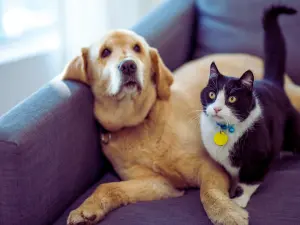
One pet means one feeding station, one bed, one shedding pattern to manage. Add a second or third animal and almost every category doubles or triples, but the odor doesn’t just double. It compounds, because the sources sit close together and feed off each other. Dander from one pet settles into bedding used by another. Litter box odor drifts into a room where a dog’s bed already holds onto moisture and hair.
Litter boxes are the clearest example of the math changing. Veterinary guidelines recommend one litter box per cat, plus one extra, so a two-cat home should really have three boxes. Each additional box is a fresh daily task, and skipping even one for a couple of days is enough to set an odor into grout lines and baseboards that a quick scoop won’t fix.
Foot traffic adds another layer. More pets means more trips in and out, more paws tracking in dirt and moisture, and more surface area for that “wet pet” smell to settle into rugs and upholstery. None of this is really about any one pet being messier. It’s about density: more sources, closer together, with less time between them for anything to fully dry out or air clean.
If you’re managing all of this with a single pet right now, our guide to cleaning a home with pets covers the daily habits and tools that keep one animal’s mess under control. Multi-pet households need most of that same foundation, just applied with more frequency and more coordination across rooms.
What Professional Cleaners Actually Do Differently in Multi-Pet Homes
The tools aren’t exotic. What changes is how deliberately they get used across a home with more than one animal.
Product Rotation, Not Product Overload
Dumping more cleaner on a problem doesn’t solve a multi-pet odor issue, and using anything too harsh isn’t safe with multiple animals moving through the same rooms. Professional teams rotate pet-safe products by area instead: one formulated for litter zones, another for fabric and upholstery, another for hard floors. Each one is doing a specific job rather than trying to do everything at once.
Litter Station Protocols
With multiple boxes in a home, cleaners treat each one as its own stop rather than a single task. That means checking placement, making sure boxes aren’t clustered in a way that discourages use, and giving the surrounding floor and baseboards the same attention as the box itself, since litter dust and tracked residue settle there just as much as inside the box.
Textiles and Upholstery Get Layered Treatment
Pet beds, blankets, and furniture absorb odor from more than one animal over time, which means a single pass rarely resets them. Professional visits work through fabric surfaces methodically, giving shared spaces like a family room sofa more attention than a single-pet home would need, simply because more animals are using it.
Air Movement and Vent Attention
Dander and odor don’t stay put. They travel with airflow, which means vents, sills, and baseboards near HVAC returns collect more residue in a multi-pet home. Professional cleanings account for that instead of stopping at visible surfaces.
DIY vs. Professional Cleaning: Where the Line Really Sits
 Daily habits still matter. Scooping litter, wiping paws, and washing bedding regularly are things you should keep doing between visits no matter how many pets you have. Where a multi-pet household runs into trouble is consistency across every source at once. It’s realistic to stay on top of one litter box, one pet bed, and one shedding pattern. It’s a lot harder to stay on top of three of each while also working, managing a household, and everything else life asks of you.
That’s the real gap professional cleaning fills. It’s not that a trained team has some secret product you can’t buy. It’s that a visit resets every source at the same time, on a schedule, instead of whichever one happens to bother you most that week. For a lot of multi-pet households, that consistency is the difference between odor that’s always creeping back and a home that actually stays fresh.
How Often Do Multi-Pet Homes Need Professional Cleaning?
Frequency should scale with pet count and how much shared space they use. A household with two or more pets and shared living areas usually holds up best on a weekly schedule. Bi-weekly works for many multi-pet homes with a bit more square footage or fewer high-traffic shared rooms. Monthly can work for lighter multi-pet situations, but it’s the option most likely to let odor build back up between visits.
Executive Maids offers weekly, bi-weekly, and monthly recurring cleaning plans, and the products used are eco-friendly and pet-safe, so they’re comfortable for households with multiple animals moving through the home during and after a visit. You’ll also get the same cleaning professional on repeat visits, which matters with multiple pets since your team gets to know which rooms need extra attention and which ones don’t.
Signs Your Multi-Pet Home Needs a Professional Reset
- Odor returns within a day or two of your own cleaning, no matter how thoroughly you clean.
- You’ve started noticing the smell only after being away from the house and coming back to it.
- Litter box areas smell clean right after scooping but not by the next day.
- Guests or visitors mention a pet smell you’ve stopped noticing yourself.
- Shared furniture, like a family room sofa, holds onto odor even after washing covers or throws.
Frequently Asked Questions
How often should a home with multiple pets be professionally cleaned?
Most multi-pet households with shared living space do best on a weekly or bi-weekly schedule. Homes with fewer pets or less shared square footage can often stretch to monthly, but odor is the first thing to creep back in if visits are spaced too far apart.
What cleaning products do professionals use for pet odor in multi-pet homes?
Pet-safe, non-toxic formulas are standard, applied by area rather than as a single all-purpose spray. Litter zones, fabric surfaces, and hard floors each call for a different approach, and rotating products by area works better than using one product everywhere.
Can a cleaning service fully get rid of pet odor, or does it come back?
A professional cleaning resets odor at the source, but ongoing prevention still depends on daily habits between visits, like scooping litter and wiping paws. Recurring service keeps buildup from getting ahead of you, which is different from a one-time deep clean that starts to fade the moment new mess shows up.
Does having more pets mean I need a different cleaning plan than a single-pet home?
Usually yes, mainly in frequency. The tasks themselves don’t change much, but the number of litter boxes, feeding stations, and shared surfaces does, and that pushes most multi-pet households toward a shorter interval between visits than a single-pet home would need.
 Getting Ahead of Multi-Pet Odor for Good
More pets shouldn’t mean giving up on a fresh-smelling home. It just means the cleaning schedule needs to match how many odor sources are actually working against you at once.
If you’re finding that daily habits alone aren’t keeping up, a recurring cleaning plan built around your household’s pace is usually the fix, not a sign you need to try harder on your own.