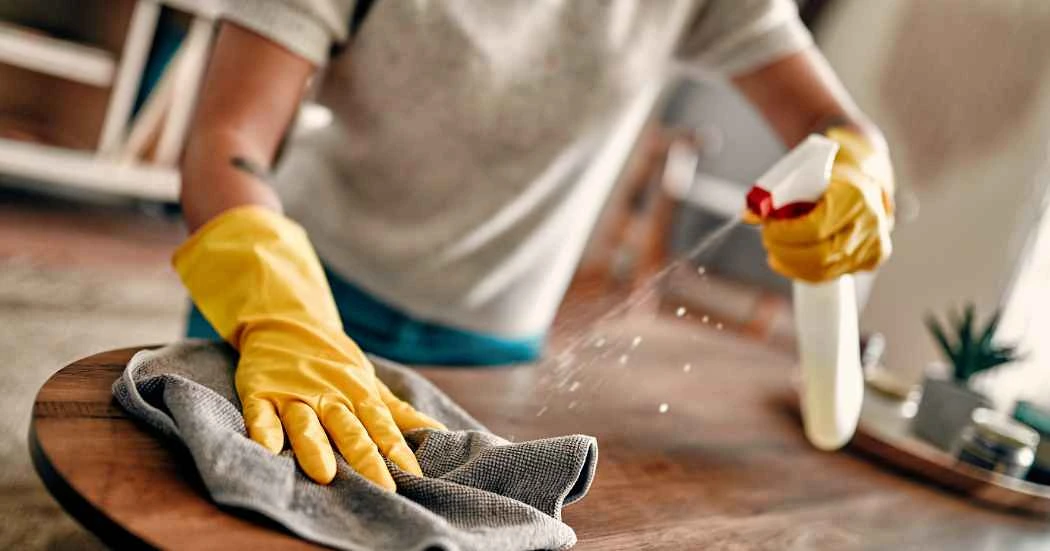
A deep house cleaning covers everything a regular clean does, plus the buildup that routine visits do not reach: inside the oven and refrigerator, baseboards and trim, grout, behind and under appliances, vents, and the accumulated grime in corners, fixtures, and hard-to-reach spots.
It resets a home to a true baseline. If you are comparing options for deep cleaning services, here is exactly what is included, how it differs from a standard clean, and why older Philadelphia homes so often need one before anything else.
What’s Actually Included in a Deep Clean?
A deep clean is methodical and goes room by room into the detail a maintenance clean skips. While the exact scope may depend on your home and selected service package, a professional deep clean typically includes:
- Kitchen: Inside the oven and refrigerator, range hood and stovetop, backsplash, cabinet faces, behind and under movable appliances, and the sink and fixtures descaled.
- Bathrooms: Tile and grout scrubbed, shower and tub buildup removed, fixtures descaled, exhaust covers cleaned, and detail around the base of toilets and vanities.
- Whole-home detail: Baseboards, door frames and trim, window sills, light fixtures and switch plates, vents and returns, handrails, and cobweb removal up high.
- Floors: Edges and corners, under furniture where reachable, and a thorough pass rather than a surface sweep.
How Is Deep Cleaning Different From a Regular Clean?
A regular clean maintains a home that is already in good shape. It focuses on surfaces, floors, kitchens, bathrooms, and the living areas used every day on a recurring rhythm.
A deep clean resets a home that has fallen behind or has never been professionally cleaned. It reaches the buildup that accumulates over months and years. The simplest way to think about it is this: regular cleaning maintains, deep cleaning restores.
If you want the full side-by-side, read Executive Maids’ companion guide on deep cleaning versus regular cleaning.
Why Philadelphia Homes Often Need a Deep Clean First
Older housing stock is the reason. Much of Philadelphia is made up of rowhomes, twins, and converted older buildings, and those homes hold onto buildup in ways newer construction does not.
Cast-iron radiators trap dust in their fins. Original hardwood, stair treads, and decades-old grout need restorative attention. Hard water leaves scale on fixtures over time. When a home has had years of light upkeep, or a new owner inherits another household’s buildup, a deep clean establishes the baseline that recurring service can then maintain.
That is why Executive Maids starts many new clients with a thorough initial clean before moving to a regular schedule. For city-wide service details, visit the Philadelphia house cleaning page.
How Long Does a Deep Clean Take?
A deep clean takes longer than a regular visit because there is more to reach. The exact time depends on the size and condition of the home and how long it has been since the last thorough clean.
A multi-level Philadelphia rowhome that has not had a deep clean in a while will take meaningfully longer than a small, well-maintained apartment. The most reliable way to get a time estimate is to have the home assessed for a quote.
When Should You Book a Deep Clean?
The most common triggers are moving in or out, seasonal resets, after a renovation or construction dust, before or after hosting, and as the first visit before starting recurring service.
If any of those apply, a deep cleaning is usually the right starting point. It gives the home a full reset so you are not trying to maintain a standard the home has not reached yet.
Does a Deep Clean Help With Allergens and Air Quality?
Yes, and for many households it is one of the main reasons to book one. The buildup a deep clean targets, including dust on baseboards and trim, dander in high-traffic areas, settled particles on vents and returns, and grime in corners and behind appliances, is exactly the material that can circulate back into the air a home breathes.
Reaching those reservoirs and removing them does more for indoor air than a surface clean can. This matters most in older Philadelphia homes, where decades of accumulation can hide in radiators, original woodwork, and rarely disturbed corners.
If air quality or allergies are a concern in your household, Executive Maids’ post on how regular cleaning improves home air quality covers the maintenance side, while a deep clean handles the reset.
Is a Deep Clean a One-Time Service or the Start of a Routine?
It can be either, and both are common. Some clients book a deep clean as a standalone reset around a move, a renovation, or a season change.
Others use it as the foundation for ongoing service. The deep clean establishes a true baseline, and recurring visits maintain it from there, which keeps every future clean lighter and more consistent. Executive Maids starts many new clients this way for exactly that reason.
Whichever path fits, the deep clean is the right first step because maintaining a high standard is far easier than trying to reach one a little at a time.
Start With a Cleaner Baseline
A deep house cleaning gives your home the kind of reset that routine upkeep cannot provide on its own. It is especially helpful for older Philadelphia homes, homes with allergy concerns, homes preparing for guests, and households getting ready to start recurring service.
If your home needs more than a surface refresh, request a quote from Executive Maids and find out whether a deep clean is the right first step.
About the Author
Dawn Zapf, Owner of Executive Maids. Dawn founded Executive Maids in 1993 with a simple mission: to help people live happier, healthier lives. With more than 30 years in residential cleaning across Pennsylvania, New Jersey, and Florida, she leads a team built around the belief that hiring well is what makes great service possible.